
The week before the church bazaar, Carol counted what was left in the coaster bin and came up with four. Four coasters. Six hours of fair, a table full of tumblers, and nothing for people to set them on but a paper napkin.
Up to then I had been cutting my own out of slate tile from the hardware store. Twelve inch squares, chopped down on the wet saw, edges sanded by hand, and about a third of them cracking or chipping at a corner before they ever got near the laser. Two hours of saw work to get twenty decent pieces, and my back ached the next day. That was the week I ordered the MONKEY SUN slate coasters: sixty to a box, four inches square, cut and edged already.
The box landed on the porch Thursday. I opened it on the workbench and laid the pieces out in rows to see what I had. Sixty of them, all within a hair of four by four, rough natural edges on every one, and enough variation in thickness to know it was real stone and not something poured in a mold. I sorted them into three piles by how the face looked. The flattest ones for names and dates, the ones with more movement in the stone for simple designs, and the rough-edged ones for the cheap basket Carol keeps at the front of the table.
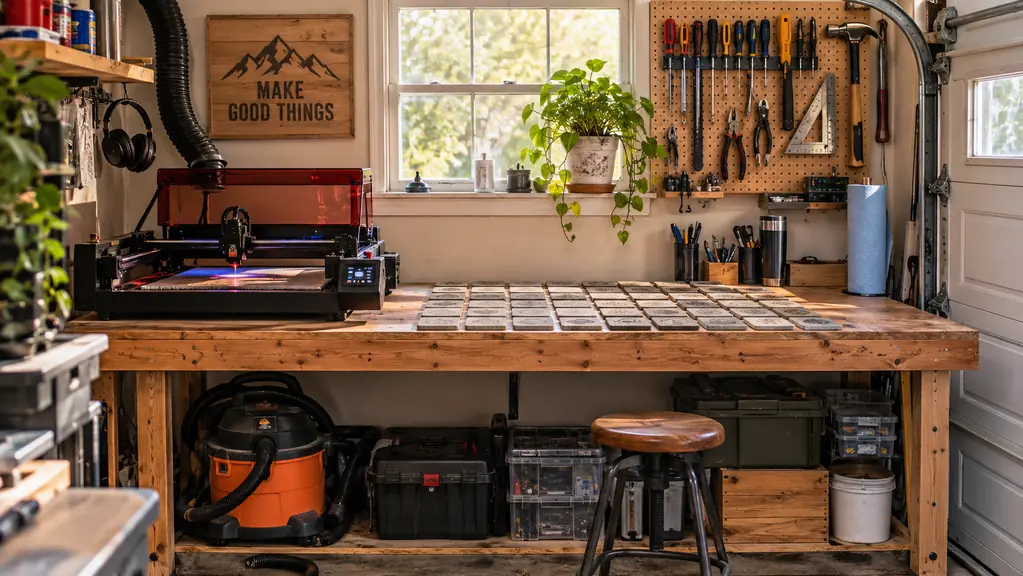
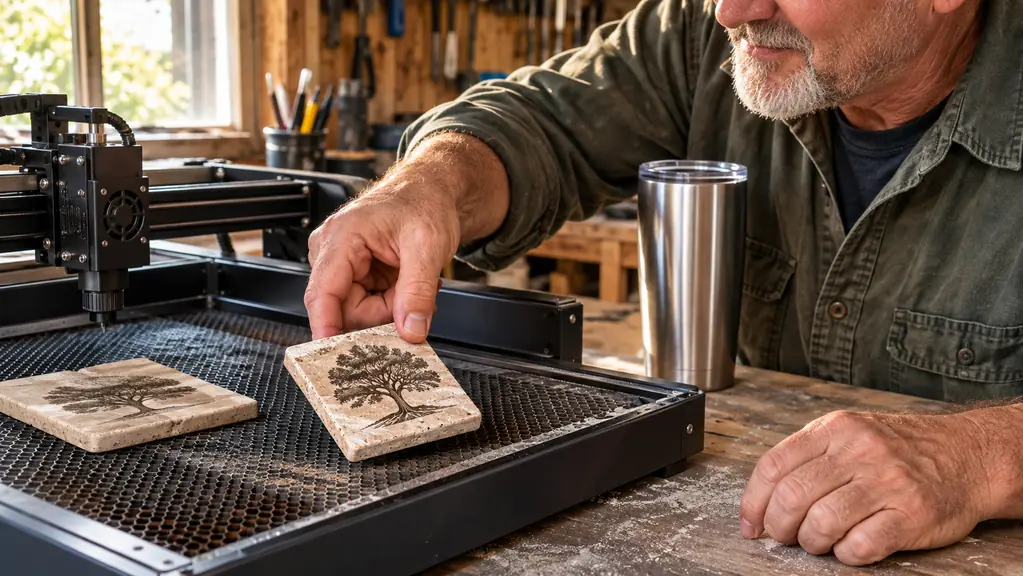
Here is what I learned about engraving them. Slate takes a laser cleanly. My diode burns a pale line into the surface with a little dust on top, and a wipe with a dry cloth takes the dust off. I run the machine slower than I run wood, because the stone wants the heat to sit a moment longer before it holds a mark. If you are starting out, burn a test grid on one coaster before you commit a design to a batch. You waste one piece and save eight.
What I do not love. The dust. Engraving sixty of anything leaves a fine powder over the workbench, and a shop vac with a brush head is the only thing that keeps it from following me into the house. They are hand wash only, which matters when you are selling to someone who will drop one in the dishwasher the first night, so I say it right at the table. And the edges are handmade, so a few pieces have a corner sharp enough that I hit it with a sanding block before it goes in the basket. That is five minutes with a cup of coffee, not a problem.
The first batch I ran, I lined up twelve on the bed and tried to do them all in one job. Bad idea. Two of them sat a hair proud of the others and came out with soft lettering. Now I run four at a time, check each one as it comes off, and it takes about the same clock time because I am not re-running anything.
Sixty pieces out of one box, all four inches square, meant I spent Saturday morning at the table with people instead of at the saw with a respirator on.
The box that got me off the wet saw and back to the laser
Sixty square slate coasters, four inches on a side, natural stone with rough handmade edges, ready to engrave the day they land on the porch. No cutting, no sanding, no scrap bucket.
Amazon Check Today's Price on Amazon →The bazaar went better than the coasters deserved. Carol sets a mug on one with a price card beside it, and people pick them up, turn them over, run a thumb along the rough edge. Two women asked whether the edges were supposed to be uneven. I told them yes, that is the stone, and they bought four between them.
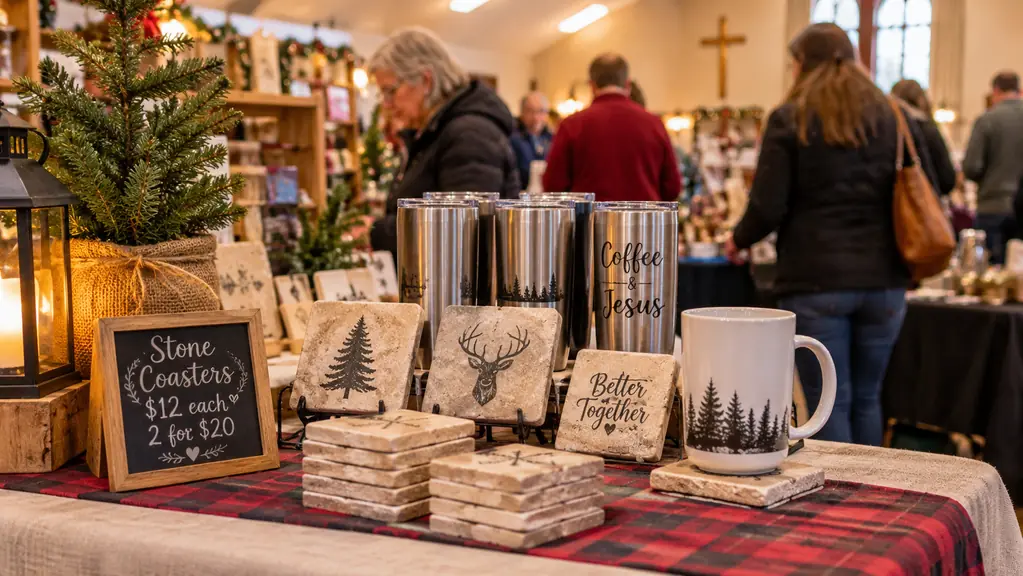
I glue a felt pad on the back of every one that goes to a fair. Cheap peel and stick pads from the hardware store, and they keep the piece from scratching a coffee table. It also gives the coaster a little weight in the hand, which people seem to like more than I expected.
A note on designs. The stone has movement in it, swirls and lighter patches, and a thin line drawing gets lost in all that. Bold lettering and simple shapes hold up. I keep a folder of six designs and rotate them: a monogram, a pine tree, a small cabin, a dog's profile, a date stamp, and one that reads WELCOME TO OUR HOME in caps. Those six outsell anything clever I have tried.
The custom orders are where the box has paid off. A neighbor wants six with her daughter's wedding date. A fellow from the fire hall wants a set with the station number. With the MONKEY SUN box on the shelf I do not turn work down because I am short on blanks. I engrave them, wipe them, stack them, and they are ready when the person stops by.
If you are weighing this against hardware store tile, I did that for a year and it works. It is also an hour of cutting and sanding per batch and a scrap bucket that fills faster than you would believe. I wrote up the longer comparison and a six month note on how the slate has held up, and both are linked from this page.
One more thing worth saying. Sixty coasters sounds like more than you need until you sit down and count what a fair takes. I bring thirty, keep twenty in a bin under the table, and the last ten stay home as spares for the ones that chip in transit. That works out to two fairs and a run of custom orders before I need to think about reordering.
What I'd Tell You If We Were Sitting at My Kitchen Table
I would tell you to buy the MONKEY SUN box, not the tile, unless you already own a wet saw and enjoy an evening running it. Test one coaster before you run a batch. Keep a sanding block within arm's reach for the corners. Do not promise anyone a dishwasher safe coaster, because it is not one. And do not overlook the coaster as a product. It is the cheapest thing on the table and the easiest thing for a stranger to pick up, which makes it the best first sale you have got. Carol figured that out before I did.
Sixty blanks on the shelf beats a stack of tile and a wet saw
Natural slate, four by four inches, rough handmade edges, hand wash only. One box fills a fair table and still leaves spares at home.
Amazon See the 60-Pack on Amazon →