

Coasters are the first thing I tell anybody to run when they get a laser working in the garage. Not because they impress anyone, but because they forgive. A cutting board is a two hour commitment and one bad pass ruins a piece of maple. A coaster is four inches of stone that takes a couple of minutes and costs little enough that a mistake does not sting. I bought a 60 pack of MONKEY SUN 4 x 4 inch square slate coasters about three years back, and there is still a box on the shelf under my bench. Here is what that box actually did for the part of this hobby that pays for itself.
I am not going to tell you it is a business in a box. It is a box of rocks. What you do with them decides whether you get repeat orders at the church bazaar or a shelf full of unsold stock nobody wants to carry back to the truck. But after three years of folding tables, neighbors knocking about wedding gifts, and a lot of wasted blanks, I can tell you the ten reasons these earn their shelf space, and the two or three places where they will trip you up if nobody warns you first.
Sixty blanks, one shoebox, a whole craft season
The MONKEY SUN 60 pack is 4 x 4 inch square slate with a handmade rough edge, sized to drop into the holders and gift boxes you already own. Hand wash only, so say so at the table.
Amazon Check Today's Price on Amazon →Sixty blanks means sixty finished pieces from one order
One box carries you through a whole season. I sell sets of four, so sixty coasters is fifteen finished gifts, or fifteen sales if the table stays busy. That math matters when you are deciding whether to give up a Saturday for a bazaar. You are not reordering in October and paying shipping twice, and you are not rationing the good designs because six blanks are left in the drawer. The whole pack lives in one small carton under the bench.
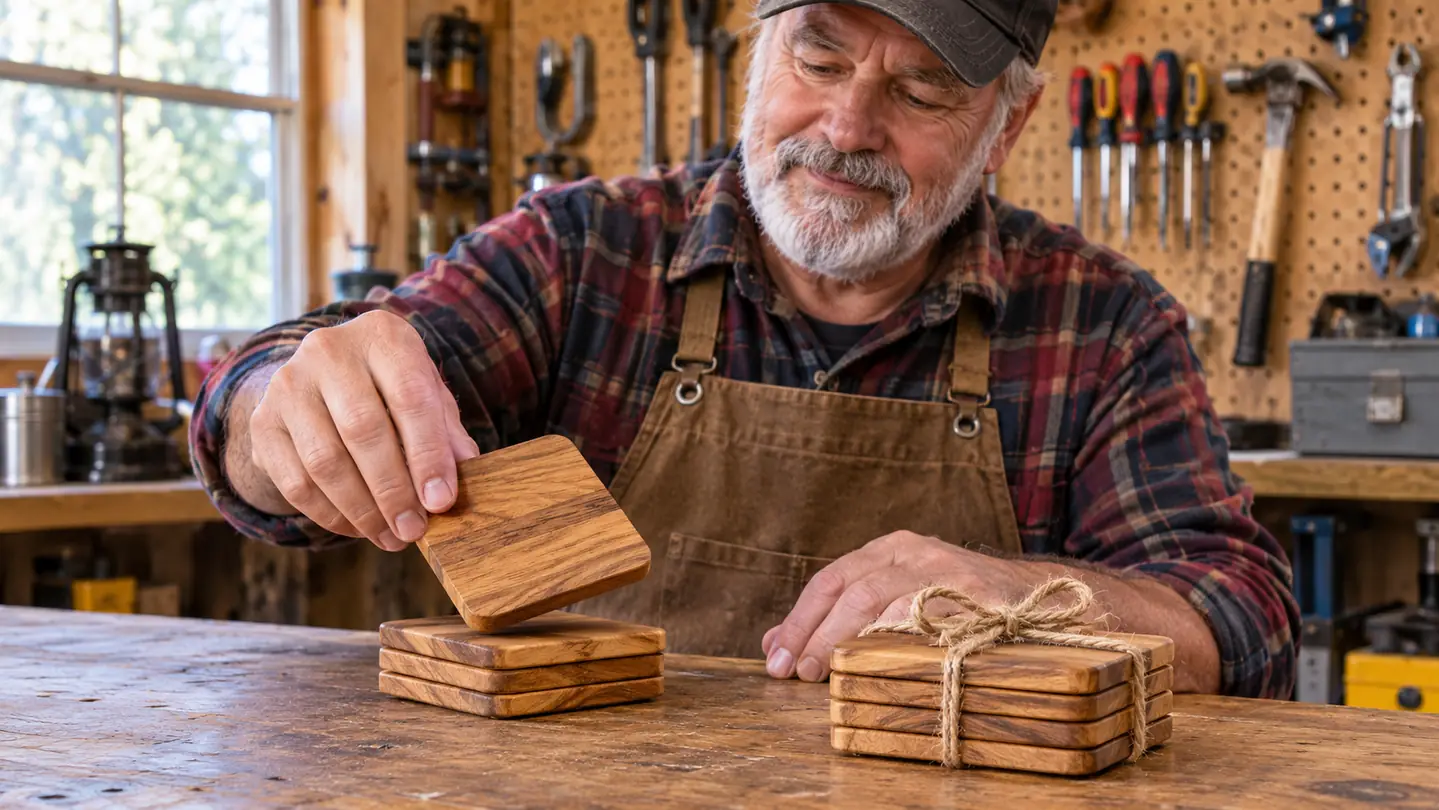
The 4 x 4 inch square fits the holders and boxes you already bought
The size is the boring reason this works. Four inches square is the standard coaster footprint, so the blanks sit flat in the cork backed holders, the little wooden caddies, and the four slot gift boxes sold at the same fairs. I do not hunt for a special box or trim foam to make a set look right. What comes off the bed goes straight into packaging, and that is the difference between finishing twenty sets on a Friday night and finishing eight.
The rough edge hides a beginner's lineup mistakes
Every coaster in the pack has a handmade rough edge, so the outline is never perfectly straight. That sounds like a flaw until you have run your tenth one and notice the uneven rim pulls the eye away from the design. A layout sitting a hair off center does not announce itself the way it would on a machined tile with a crisp factory edge. If you are still learning your jig and your origin point, that forgiveness is worth more than any line on the spec sheet.
Slate engraves with contrast you can read from three feet away
This is the reason slate outsells wood at my table. The engraved area sits dark and flat against the stone, so a monogram or a simple logo reads across the room. Buyers at a bazaar walk past forty tables in an hour. If they have to lean in to see what is on the coaster, they keep walking. I have sold more sets off one clean initial than off every intricate design I was proud of combined, and that is a hard lesson to learn on a walnut board.
No sanding, no oil, no cure time before it goes in the box
Maple needs sanding, then a finish, then a day on the rack before it can be handled. A slate coaster comes off the bed, gets a wipe with a dry cloth, and goes into the gift box. That single fact is why I can run coasters on a weeknight after supper and be done before the news. The care instruction on the listing says hand wash only, and I say it out loud to every buyer at the table, because a coaster that goes through a dishwasher comes back to you as a complaint.
A coaster is four inches of stone and a couple of minutes. It is the cheapest way you will ever find out whether your file is actually right.
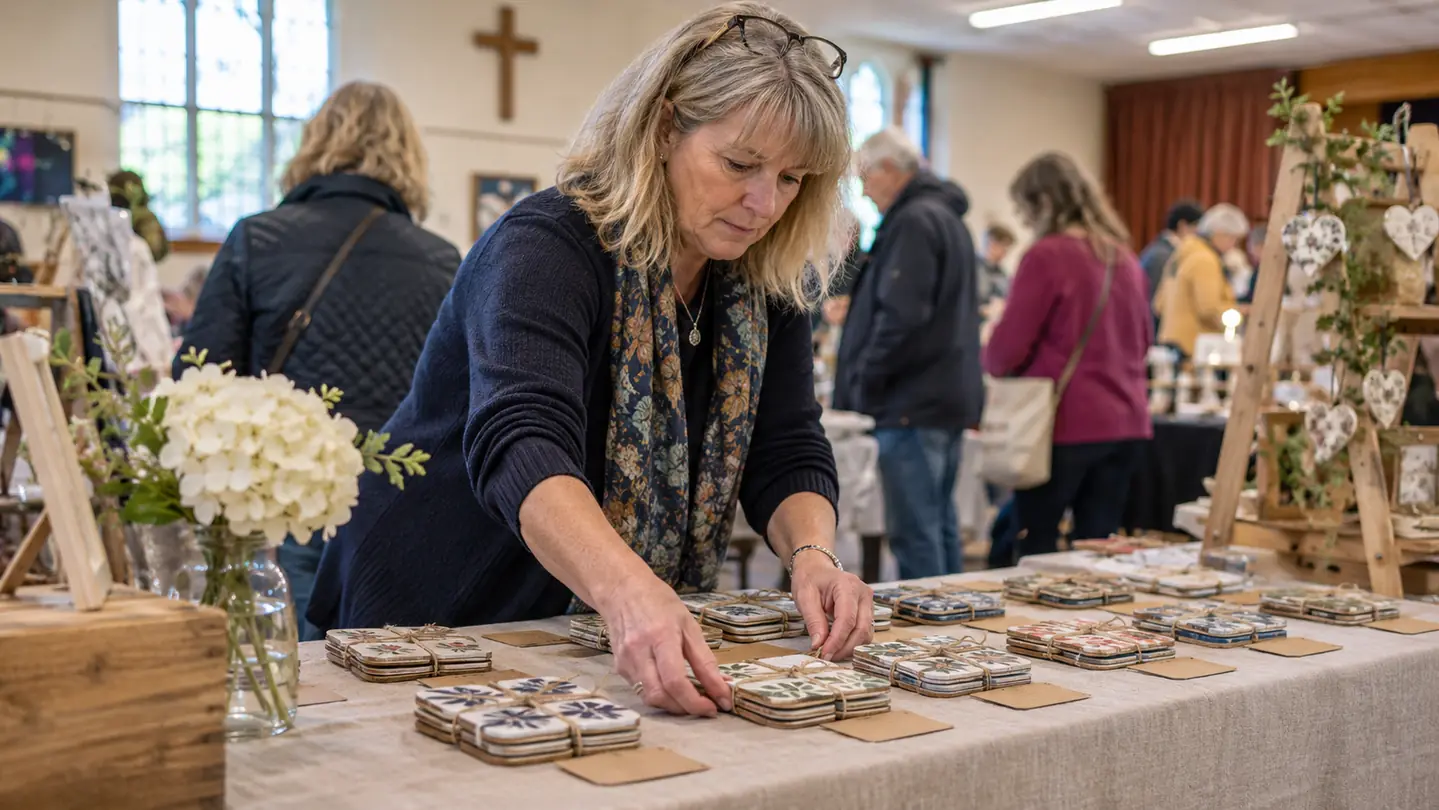
They stack flat, so a whole show fits in one tote
Sixty coasters stacked is a couple of inches of height. Add the holders, the tissue, and the sign, and the inventory for a Saturday fits in one tote bag and a fold flat crate. Compare that to signs or cutting boards, where you need the truck bed and a hand truck and a second trip. When you are a one man setup at a church bazaar with a six foot table and a fifty minute window to get in and out, flat merchandise is the difference between a calm morning and a bad back.
A test engrave costs you one blank, not a board
When a neighbor asks for a design I have not run before, I burn it on a coaster first. Same file, same settings, smaller canvas. If the font is wrong or the letter spacing collapses, I am out one four inch piece of stone instead of a maple board. Then the test piece becomes a sample at the front of the table, or it goes in the bag with the order. I have caught more layout mistakes on that little square than on anything else in the shop.
Sets of four sell, and one box makes fifteen of them
Nobody buys one coaster. They buy four, or six, sometimes eight for a cabin. Once you accept that, the 60 pack stops being bulk and becomes fifteen sets, which is a respectable show. I tie each set with jute, drop a business card in the box, and that is the entire product. The blanks are inexpensive enough that the engrave time is the real cost, and engrave time on a coaster is short. That is the whole reason the math works at a small table.
They sell to painters and crafters, not just laser people
A good share of the people buying these blanks are not engraving at all. They paint them, stencil them, glue photos on for wedding favors. If you are the one at the table, that means the blank itself is a product. I keep a short stack of plain ones in a basket at the front with a small card, and they move to people who want to make their own. That is a sale I would not have made with a finished set, and it costs me nothing to offer.
Repeat orders come back for the same design next season
A coaster is a gift that gets used, and used gifts get replaced. I have neighbors who ordered a set for a spring wedding and came back in November for four more as Christmas presents. Because the file is saved and the blank size never changes, the second order takes ten minutes. That repeat work is the quiet part of a side hustle that holds up over a few years, and it needs a blank that is always the same 4 x 4 inch square, not whatever a supplier happens to have that month.
What I'd Skip
Two things I would not do with these. First, do not sell them as dishwasher safe and do not let a buyer assume it. The listing says hand wash only, and that is a real constraint, not fine print. A set that comes back dull or flaking costs you the customer and the referral, which is worse than the sale you lost. Second, skip the full bleed photo engraves on your first batch. Rough edged stone is more forgiving of fine detail than you would expect, but a photo still eats time, and time is the thing you cannot buy back on a Saturday morning.
I would also skip driving to the hardware store for three or four tiles to save a trip. By the time you are home you have spent more of your afternoon than the difference is worth, and you have four blanks instead of sixty. If you want the longer version of that comparison, I laid it out separately, along with a note on how the first batch held up over a couple of winters of craft fairs and kitchen use. Neither one changes the short answer: buy the box, learn on the box, sell the sets.
Start with the box, not the machine upgrade
Sixty square slate blanks, a saved file, and a Saturday table. That is enough to find out whether this side of the hobby suits you before you spend anything on a bigger laser. MONKEY SUN ships them in one pack, 4 x 4 inch, hand wash only.
Amazon Check Today's Price on Amazon →