
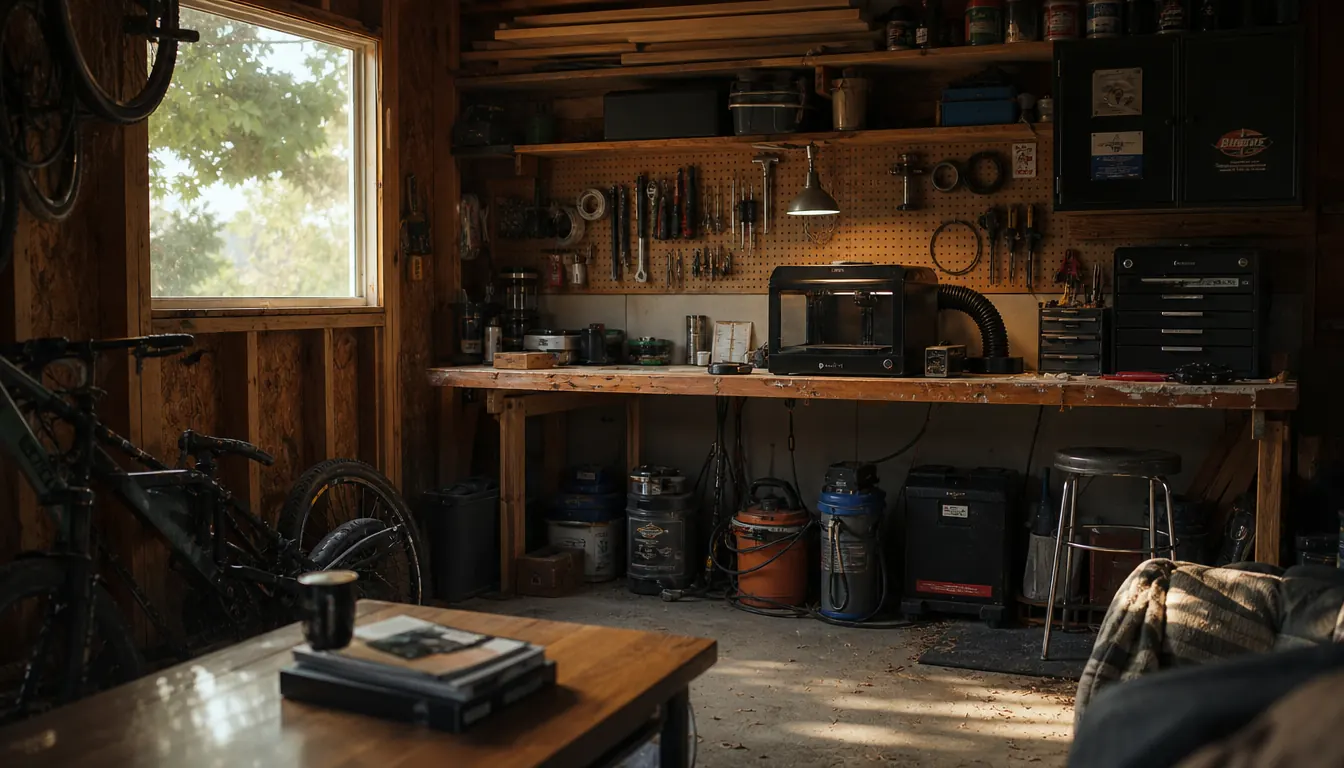
The first time I ran a full sheet of slate coasters through my machine, I had to leave my own garage. Ten minutes of engraving and the air at eye level had gone milky, the smell sat somewhere between burnt paper and a hot brake pad, and my jacket carried it into the house. Carol came out to tell me dinner was ready, took one step inside the door, and turned around without a word.
That was about three years ago, and it started a slow education in moving air. I tried a box fan in the window. I tried propping the big door open and wearing a coat in February. I tried telling myself it was fine, which lasted right up until I wiped a grey film off the inside of the truck windshield. What actually works in a one-car garage is catching the smoke where it is born, a few inches from the cut, instead of trying to clear the whole room after the fact. The tool I use for that is the SainSmart Genmitsu Smoke Purifier, and honestly, the setup matters more than the machine does. Here is the order I do it in.
The smoke does not need to leave the garage. It needs to stop at the bench.
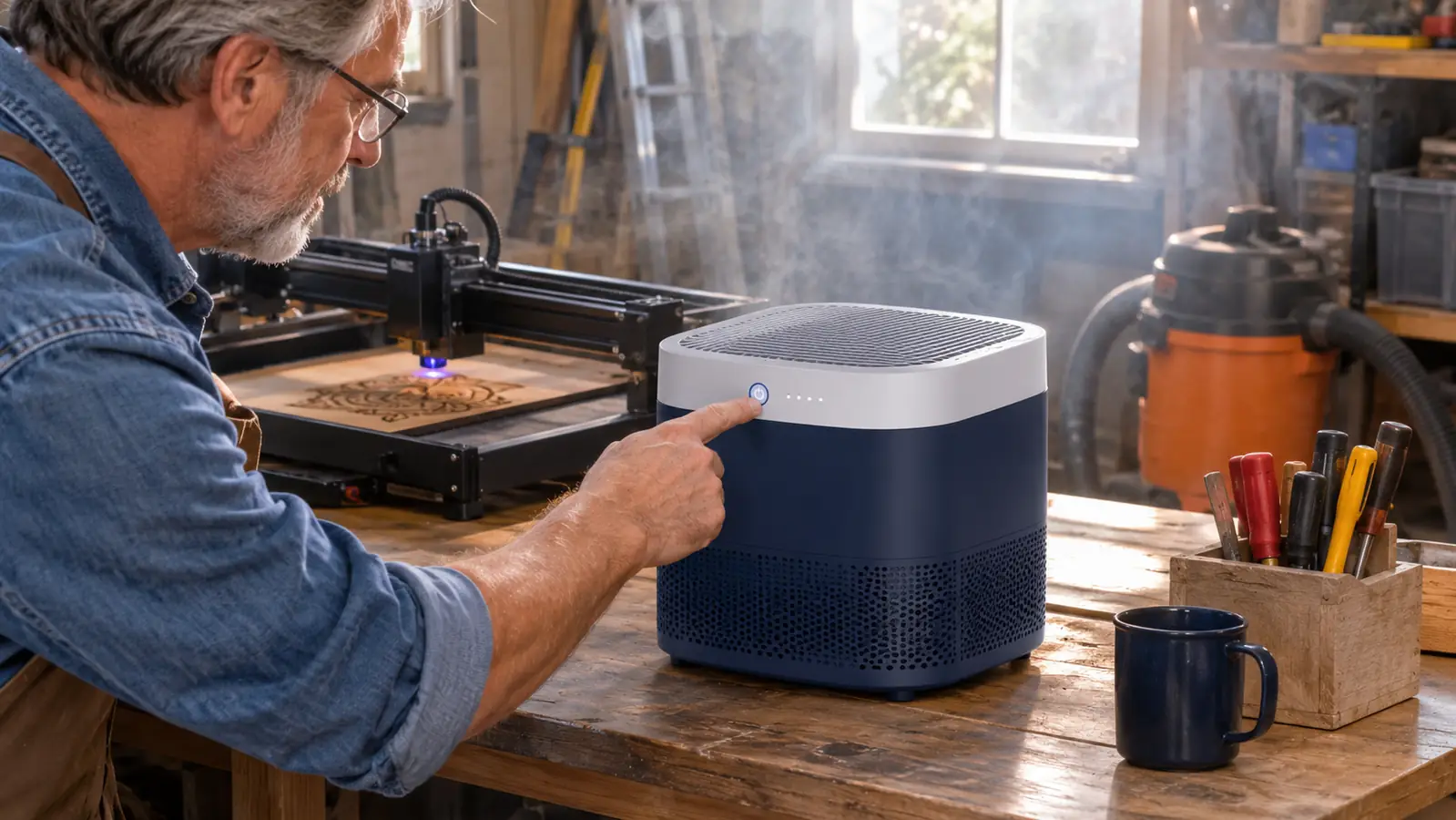
The SainSmart Genmitsu Smoke Purifier pulls from the cut instead of the ceiling, with five filter layers and three push-button speeds. It weighs 1.8 kg, so it moves wherever the plume leans.
Amazon Check Today's Price on Amazon →What the Genmitsu Unit Actually Does
It is a small recirculating filter, not an exhaust fan. Air goes in the front, passes through a pre-filter and then HEPA and activated carbon layers, five layers in total, and comes back into the room cleaner than it went in. The listing claims retention down to 0.3 microns, which is the range that covers both the fine particulate that hangs in the air and the odor that follows you inside. The SainSmart unit has three speeds on a push-button control, a rated noise level of 35 dB, and it weighs 1.8 kg. Mine measures 4.72 inches deep, 4.33 wide and 3.94 tall, so it lives on the bench full time without crowding anything.
The difference between this and a window fan is direction. A fan in the window pulls the whole room's air, including the smoke that already spread out to the rafters, and it drags a good bit of it past your face on the way. A purifier pulls a narrow stream right at the source. I still run both when I am done for the day, and the two do different jobs. Neither one replaces the other.
Step 1: Put the intake where the smoke is born
Smoke off a laser does not rise straight up. It comes off the cut in a thin plume, gets nudged by whatever draft is in the room, and drifts. On my bench it leans left and back toward the wall. So the purifier sits to the left of the machine, intake facing the cut line, roughly a foot away. When I first had it on the right side, half the plume slid past it and the room told me so within ten minutes.
The way I found that drift pattern is a trick from my HVAC days and it costs nothing. Close the room up, run a scrap of the material you actually cut, and hold a flashlight so the beam crosses the bench at a low angle. The smoke lights up in the beam the way dust does in a sunbeam. Put the intake on the side the plume leans toward, then check again. Move it three inches and check a third time. Fifteen minutes of that beats a year of guessing at it.
Keep it close but do not park it against the machine. Mine sits about a foot off the frame. Nose to nose with the engraver, the intake is fighting the draft coming off the head instead of helping it, and you will hear the airflow change when you get it wrong.
Step 2: Close the garage down to one opening
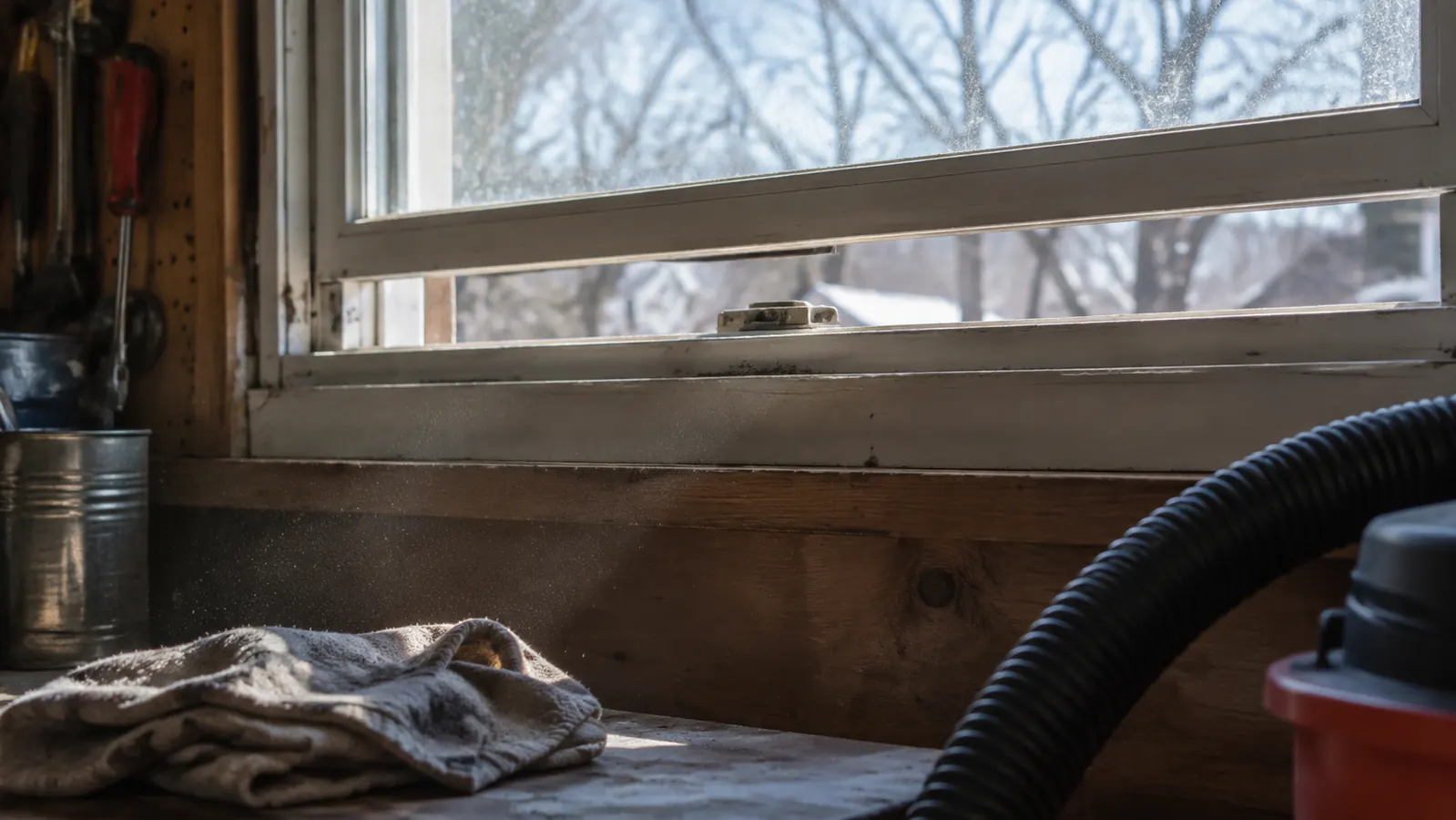
The instinct is to open everything. Big door up, window open, let it blow through. That is exactly what I did first and it made the plume wander all over the bench. A garage with two openings is a wind tunnel, and a wind tunnel moves smoke faster than a small filter can catch it. So I keep the big door down, leave the window cracked about two inches, and let the purifier work in a still room.
That gap is for makeup air, not for the smoke. A one-car garage is not airtight anyway, and a 35 dB unit on low is not going to change the pressure in a building that size. The gap just keeps the air from going stale and gives the fine dust somewhere to settle other than your lungs. When I closed everything completely to test it, the room got stuffy inside an hour and I started propping the big door again, which put me right back at the start.
February is the argument against all of this. Heat leaves. My answer was a thermometer on the bench and a heavier sweatshirt. Below about 50 degrees I run shorter jobs and take a break in between, because standing in a cold garage for two hours is how a 58 year old ends up with a stiff back and nothing finished. The purifier does not care about the temperature. I do.
Step 3: Match the speed to the material, not your mood
Three push-button speeds, and they earn their keep. Low is for leather keychains and light scoring on maple, where the smoke is thin and mostly smell. Medium handles most cutting boards and stainless tumblers. High is for slate coasters, which are the worst thing I run: dense, dusty, and they throw a fine grey cloud that will coat every flat surface in the room if you give it twenty minutes.
On low, 35 dB is quiet enough that I have walked back into the house and forgotten it was still running. On high you can hear it, and it is fan noise rather than a whine. Carol can stand in the doorway and talk to me over it without raising her voice much.
Here is the part beginners get wrong. Running it on high all the time is not the cautious choice. More airflow pulls the plume harder toward the intake, which is what you want, but it also loads the pre-filter faster and puts you on a filter schedule you did not plan. Match the speed to the material. It is a two second decision and it saves you a filter change a month.
The haze used to hang at eye level for twenty minutes after I shut the machine off. Now I can start a second batch before the first one cools.
Step 4: Check the filters before the smell tells you
Five layers, and the pre-filter does the ugly work. After every second slate session I pull it and vacuum it with the shop vac. Skip that and the whole stack starts laboring, and the unit gets louder while moving less air than it did last week.
The HEPA and carbon layers are the part you keep paying for. When the smell comes back before the visible haze does, the carbon is done. When the airflow at the intake drops off and the haze lingers longer than it should, the HEPA is loaded. Nothing on the unit reports this to you, no gauge and no warning light, so you learn the two signals and you keep a spare set on the shelf. I pencil the install date in the corner of the filter frame, which is an old service habit, but it stops me from guessing at it.
One more thing: do not vacuum the HEPA. It is not a fabric bag and poking at it just tears the media. Tap it out if you must, then replace it.
Step 5: Clear the room after the cut, not during
The purifier handles the smoke coming off the cut. It does not handle the dust that already settled on the bench, the shelf above it, or the lid of the shop vac. After a slate run I leave the unit running another ten or fifteen minutes while I put things away, then wipe the bench down with a damp rag and empty the vac outside.
A habit worth building: do the wiping while the unit is still running, not after. The dust on that bench is the dust that already got away. Stir it up with the fan off and it goes right back into the air and settles again by morning.
I also stopped wearing the same jacket to the garage that I wear into the house. That sounds fussy until you live with it. The smell lives in fabric, and no bench filter pulls it back out of a coat.
What Else Helps
The purifier is the main tool here, not the only one. A box fan in the window on exhaust clears the whole room in one big pass at the end of the day. That is a different job from filtering at the bench, and neither one covers for the other. I lean on the purifier during the cut and the fan afterwards.
An apron beats a jacket. A damp rag beats a broom, because sweeping a garage floor after a slate run just puts the same dust back into the air you have been paying a filter to clean. I wipe the bench and the machine housing, empty the vac outside, and keep the door to the house shut until I have changed out of the apron.
Small stuff, and all of it matters: a cheap thermometer on the wall, a stool so you are not hunched over the bench for two hours, and a task lamp that throws light under the engraver head instead of over your shoulder. None of it filters smoke. All of it makes the room easier to stay in, which means you keep the big door down instead of propping it halfway through a job.
Where It Falls Short, and Who It Still Suits
It is a one-machine tool. If you ever run two engravers at once, or move up to a cutter that takes a corner of the garage, this unit pulls from one spot while the other machine smokes into open air. For a single hobby machine on a bench, one is enough. For two machines, I would want two units.
The filters are a running cost. Not a large one, but a real one, and if you cut slate every weekend you will feel it. The other honest limit is materials. Filtration is not the right answer for everything that goes into a laser. If a material gives off genuinely nasty or corrosive fumes, a purifier on the bench is not permission to cut it in a garage attached to your house. Check what you are cutting before you cut it.
Who it does suit is the person it was built for: one machine, one bench, a garage with a window, and a family who would rather not smell the work. That is my setup exactly, and it has held up through three years of weekend orders for cutting boards, tumblers and coasters. If you are somewhere close to that, one unit sitting a foot from the cut will do more for the air in that room than any fan you can hang in a window.
One machine, one filter, one bench that does not smell like a brake fire.
The SainSmart Genmitsu Smoke Purifier runs three speeds, five filter layers and 35 dB on low. Set it at the source, close the big door, and match the speed to what you are cutting.
Amazon Check Today's Price on Amazon →