
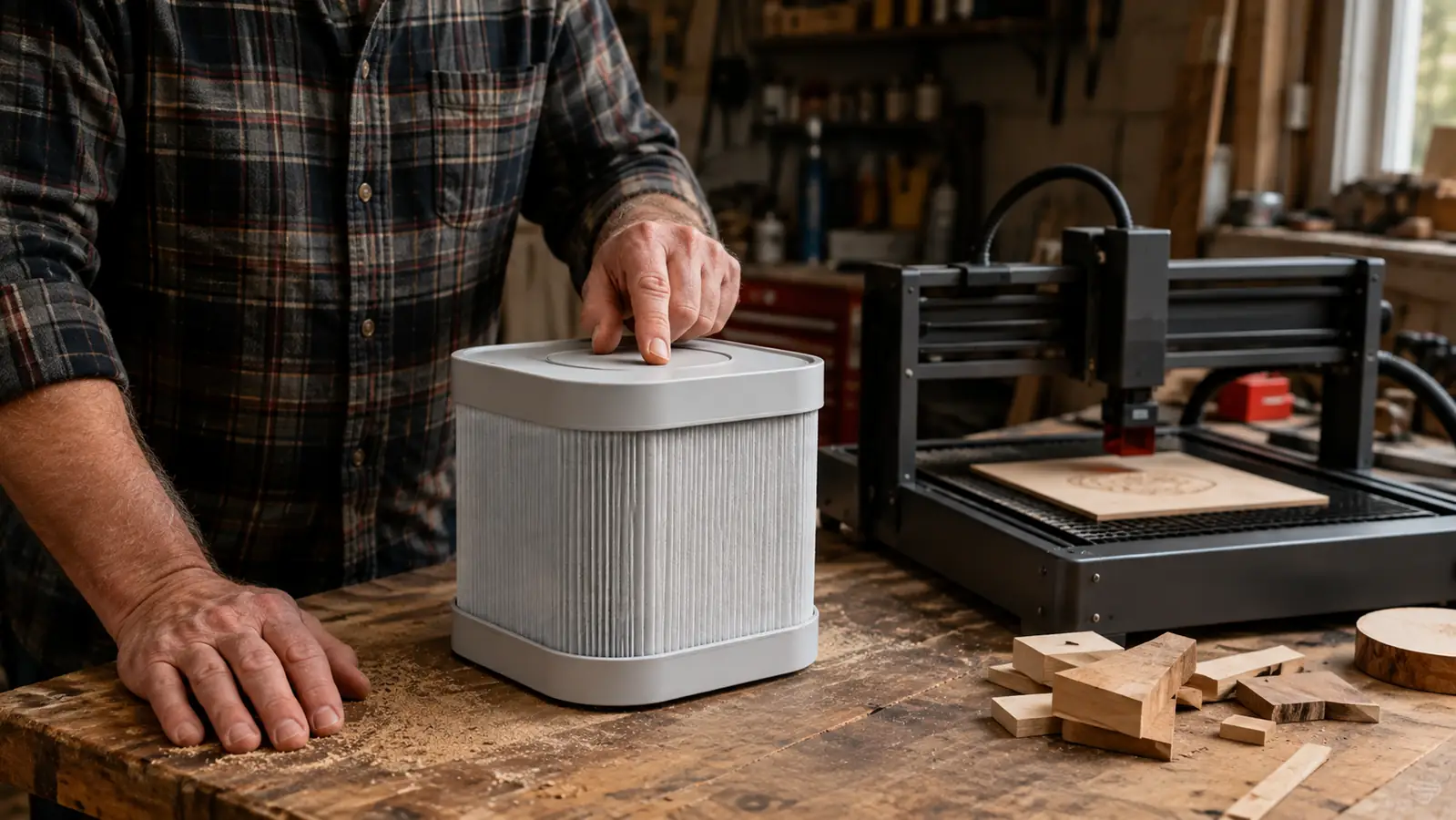
Short answer: these two do not do the same job, and treating them as competitors is how a garage ends up smelling like a campfire. A window fan moves air from one side of a wall to the other. It does not filter anything. The Genmitsu Smoke Purifier from SainSmart sits on the bench, pulls air through a five-layer filter stack, and puts it back into the room. One is a hole with a blade in it. The other is a filter with a fan behind it. If you only have room in the budget for one, the choice comes down to whether you can work with a window open all year.
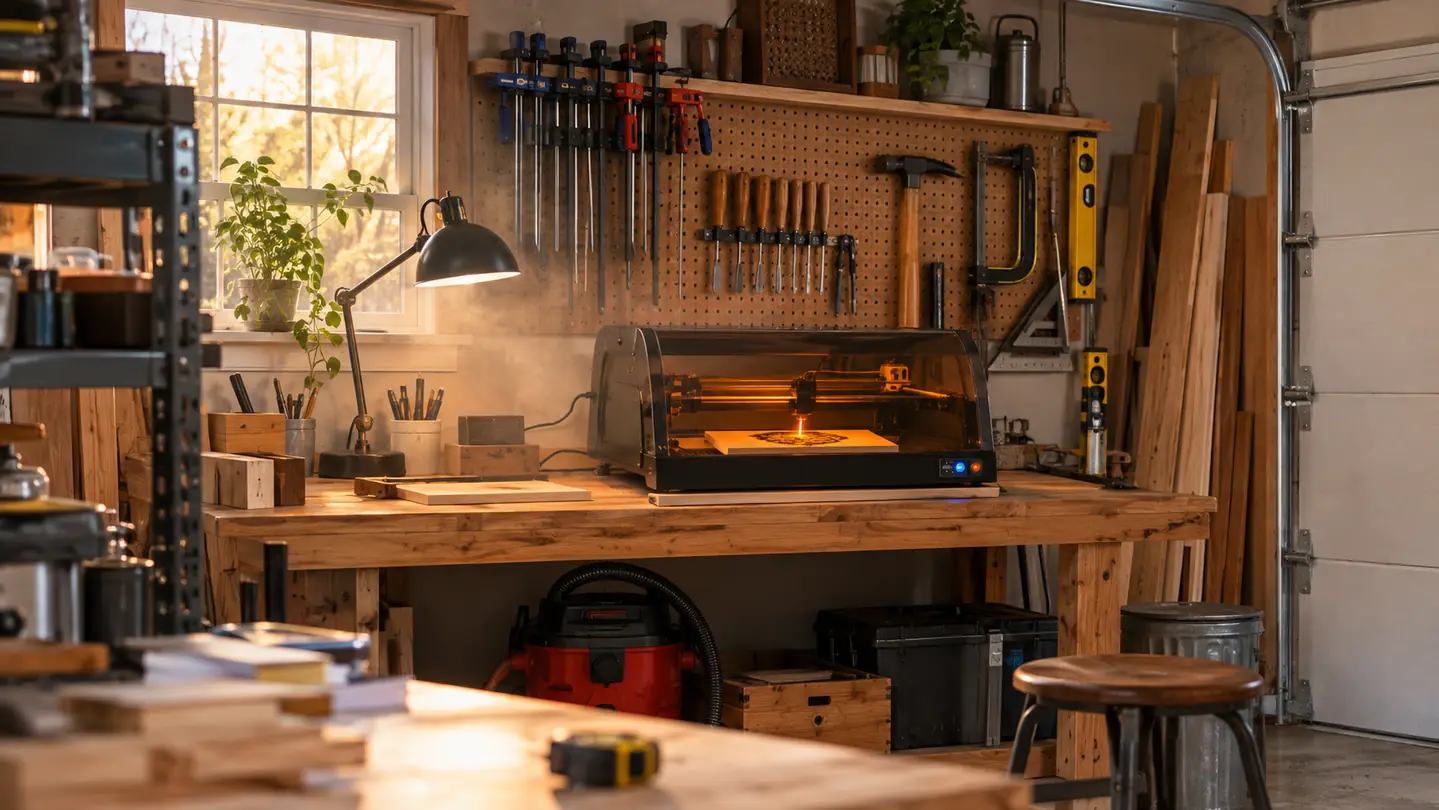
I have run a box fan in the window of my garage outside Harrisburg for three years, and I added a purifier to the bench last winter. The layout has not changed. Bench along the back wall, window on the side, shop vac underneath, laser at the left end where the light is decent. The fan was fine in June. In January it meant working in a draft with the sash up, and on still nights the smoke from a neighbor's woodstove came in about as fast as my own went out. That is what pushed me to look at what a purifier genuinely does, and what it does not.
So here is the verdict in one line. If your work happens in a garage you also use for other things, and you engrave through the winter, the purifier earns its spot on the bench. If you work three warm months a year with the door up and you want the smoke gone fast, a fan is enough and it always will be. Most people I know end up with both, and I will explain why that is not as wasteful as it sounds.
| Genmitsu Smoke Purifier | Window fan | |
|---|---|---|
| Fine dust and smoke | Pulls air through HEPA, activated carbon and pre-filter layers, rated to 0.3 micron | Filters nothing. It exchanges air and pushes some smoke outside |
| Odor | The carbon layer goes after odor as well as smoke and dust | Dilutes it while it runs, then it settles back when the air goes still |
| Air volume | Bench scale. Cleans the air it can reach and no more | Clears a whole garage in a few minutes on a warm day |
| Working in cold weather | Runs with the sash shut, so no draft across your hands | Needs an open window, so you work in whatever the weather is doing |
| Consumables | Filters get changed on a schedule you work out yourself | None. A rag on the blades once a season |
| Noise | Rated at 35 decibels, quiet enough to hear the machine cutting | Depends on the fan. On high it is loud enough to want plugs |
| Bench space | Occupies a spot on the bench beside the laser | Lives in the window, out of the way |
| Setup before a session | Set it down, plug it in, press the button | Fit it in the window, block the gaps around it, remember to pull it before rain |
| Speed choices | Three speeds on a push button | Whatever switch the fan came with |
| Best for | Year-round bench work in a garage you also use for other things | Clearing a big volume of air fast on a mild day |
Where the Genmitsu Smoke Purifier Wins
The first win is the one that got me looking: it works with the window shut. The unit pulls air through five layers of filtration, with HEPA and activated carbon doing the work that matters for laser smoke, and it is rated to catch particles down to 0.3 micron. That number is the whole argument. The haze you see off a dark walnut board or a sheet of leather is fine particulate, and a fan does not remove it, it relocates it. The purifier removes it from the air in the room and holds it in the filter until you throw the filter away.
What I tried first, back in November, was the obvious thing: man door propped open about six inches, box fan on the floor blowing toward it, window cracked on the far wall. That arrangement moved air, all right. It also pulled the smoke across my face on the way past, and on a still night it did nothing at all, because the outside air was not moving and the fan was just stirring the same cloud around the garage. I gave it three sessions before I admitted it was a fan pointed at a problem it could not reach. Pulling smoke across a room is not the same as taking it out of the air.
The second win is odor, and odor is the thing that gets you found out. My wife Carol can smell a leather batch from the back step. Running the purifier on the bench, close to where the smoke actually comes off the machine, she cannot. The carbon layer is why. I also noticed the difference in how my chest feels after a three-hour Saturday. With the fan going and the window open, I still came in with a raw throat by evening. With the purifier on the middle speed and the sash down, I did not. I am not going to dress that up as a medical claim. It is one man's experience in one garage, and it is the reason I stopped skipping sessions in February.
Where a Window Fan Wins
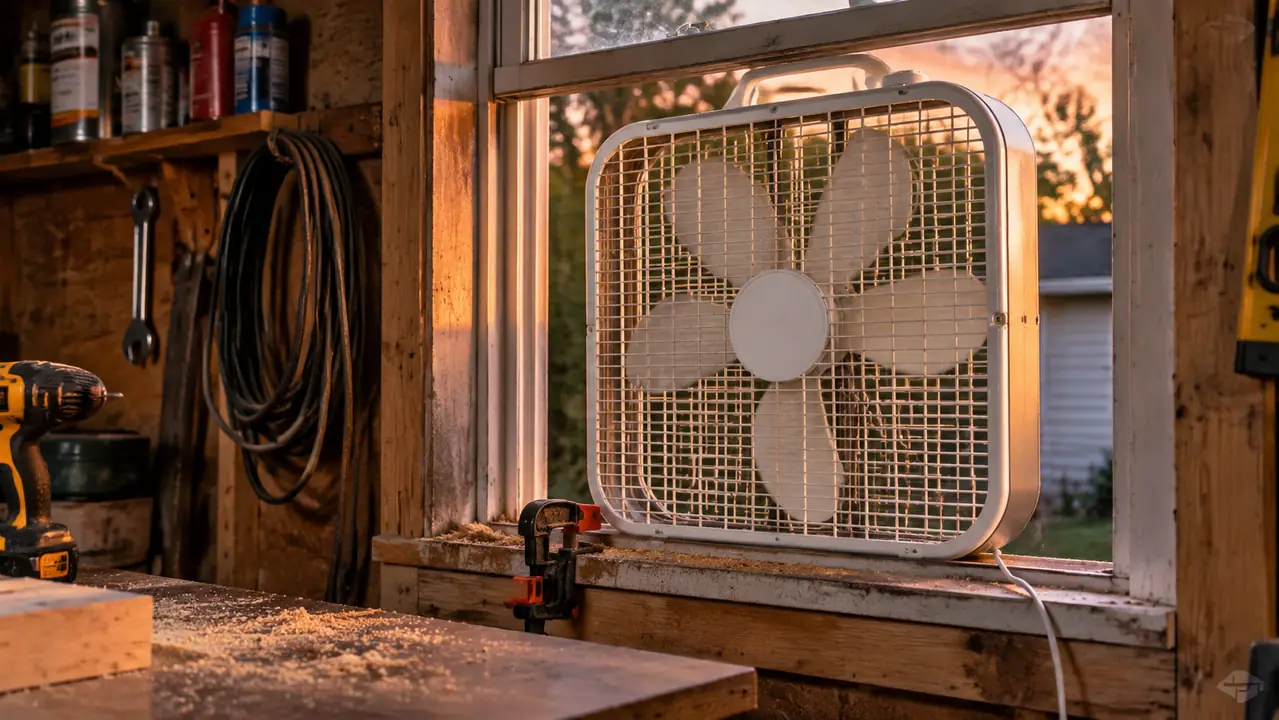
A fan moves more air in ten minutes than the purifier moves in an hour, and I am not going to pretend otherwise. On a warm Saturday when I am running slate coasters back to back, I still open the window and put the fan in it for the first pass. It clears the visible haze before I sit down. The Genmitsu unit is a bench-scale tool. It cleans the air it can reach, and it does that well, but it will not empty a two-car garage of smoke after a bad burn on a full sheet of plywood. If raw volume is the problem you have, the fan is the bigger hammer.
July is the honest test. Last summer I ran a batch of thirty slate coasters for the church bazaar in the first week of the month, and the garage sat in the nineties by mid-afternoon with the fan on high and the man door open. Uncomfortable, but workable, and no bench filter is going to cool a garage. The fan's real limit showed up the other way, on a night in September when a piece of scrap plywood had a knot in it and the burn went heavy. The fan cleared the visible smoke in about ten minutes. It did nothing about the smell, which sat in that garage until the next morning.
The second win is that the fan asks for nothing. No filters to buy, no replacement schedule to think about, no guessing whether the carbon is spent. It was already in the garage when I needed it, and it lives in the window frame, so it takes up none of my bench. That last point matters more than it sounds in a one-car garage, where the bench is the entire operation and every square foot of it is spoken for. In July, when the shop sits in the nineties, the fan also does a second job the purifier cannot touch. It pulls the heat out.
The fan was never the problem in July. The problem was that I needed the smoke gone in January, and in January the window stays shut.
If You Work With the Window Shut, This Is the One to Look At
The Genmitsu Smoke Purifier runs three speeds on a push button, weighs 1.8 kg, and pulls air through a five-layer filter stack instead of pushing it out your window. For a bench in a garage you heat, that is the difference between engraving in January and not.
Amazon Check Today's Price on Amazon →What Each One Asks of You
The SainSmart purifier wants filter attention. Nobody hands you a schedule because it depends on how much you cut and how dirty the stock is, so you work it out yourself. Here is how that actually goes in my shop. Mine ran through the winter on maybe four sessions a week, mostly maple and walnut, with a leather batch every couple of weeks. By the middle of February the pre-filter was gray and matting up, and a pass with the shop vac nozzle once a week kept it from loading faster than it needed to. The carbon held longer than I expected, close to three months on that schedule, and then one Saturday I walked in after a tumbler run and could smell it from the doorway. That was the signal. I keep a spare set on the shelf above the bench now, so a spent filter does not end a session.
The carbon is the part that gives up first, and you will know because the smell comes back before the visible smoke does. That is the tell. When Carol starts asking what I have been cutting, the carbon is done.
The fan wants almost nothing. The blades collect dust and the dust goes sticky, so it takes a rag and ten minutes once a season. It also wants to be pulled out of the window before rain, which I forget about twice every summer and regret both times. Beyond that it just sits there and works.
Neither one replaces the shop vac, and neither one replaces cracking the man door for a bit of cross flow when you are doing a long run. If you want the full picture of what belongs in a small engraving setup, I went through the whole list of gear in a separate piece on why a fume extractor pays off for laser engraving, and the short version is that air handling is not the place to save a few dollars.
The Setup I Actually Run
The sequence matters more than the equipment. When I start a session in warm weather, the fan goes in the window first and runs on high for five minutes to knock down whatever is hanging in the air. Then it comes out, or stays on low if the day is mild, and the purifier goes on the bench at the downstream end of the machine, so the smoke drifts toward it instead of past it. One push button cycles it through three speeds. Low for leather patches and light engraving on maple. Middle for tumblers and the slate coasters. High when I am burning deep on walnut and the smoke is thick enough to see.
Placement is the part people get wrong. Sitting the unit across the garage from the laser is the same as not owning it. It needs to be within arm's length of where the smoke leaves the work, and on the side the draft in the room is already pushing toward. Mine, the SainSmart unit, sits about two feet from the right edge of the machine, and I move it maybe once a month when I change the layout. At 1.8 kg it picks up with one hand, and at 35 decibels I can still hear the machine running and the phone when it rings.
Take a Tuesday in March. I had an order for twenty-four slate coasters from a neighbor who wanted them for a retirement gift, and I started at six in the evening with the garage door down and the purifier already in place on the bench. It went on low while I laid out the blanks, up to the middle speed for the run itself, and the sash stayed shut the whole time because it was thirty-eight degrees outside and dropping. Two hours, and I walked back to the house without my coat smelling like a burn pit. The same evening three years ago would not have happened at all. I would have told the neighbor Thursday and hoped he was not in a hurry.
What changed for me was the calendar, not the air. Before the purifier, engraving season ran from April to October, and the winter months were for cutting stock and answering messages. Now I take winter orders. That is the entire case for the thing, as far as I am concerned. Not that it filters better than a fan, because that is not a fair comparison. That it lets the work happen when the window cannot be open.
Who Should Buy Which
Buy the SainSmart purifier first if your shop shares a wall with the house, if you engrave year round, if you cut leather or anything rubberized that stinks, or if the window in your work space is small, painted shut, or thirty feet from the bench. Buy the fan first if you work out of a garage with the door up nine months a year, if your runs are short and occasional, and if the only thing you actually want is the visible haze gone before your neighbor walks over. If you are somewhere in the middle, which is most people, buy the fan now because it is cheap and you probably own one, and add the purifier before your first cold season. That order works. Doing it the other way around works too, you just spend one winter with the sash up learning why I wrote this.