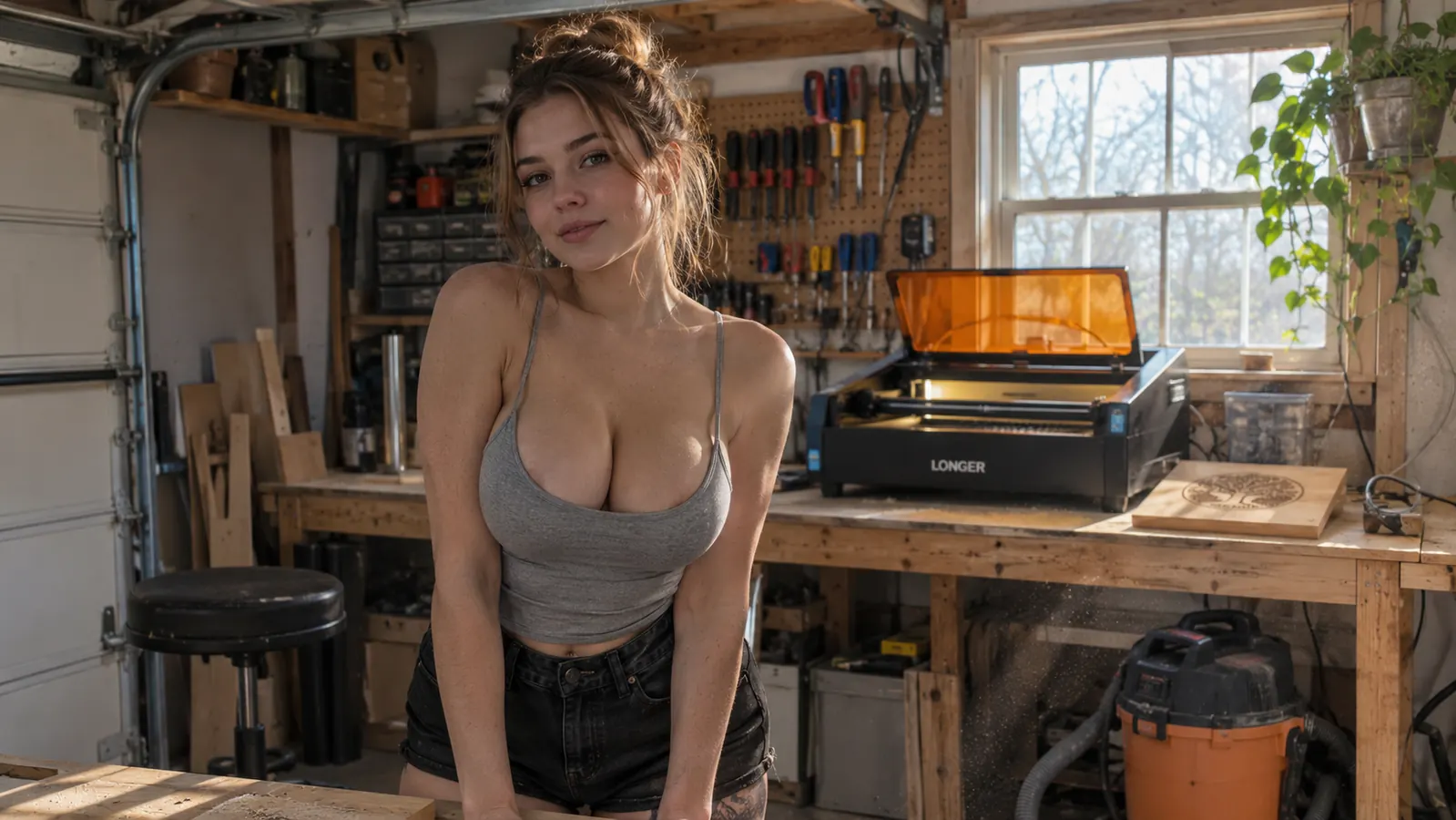
The first question people ask when they see a laser running in my garage is whether a hobby machine actually earns its bench space. Fair question, and I am not going to hand you a number. What I can tell you is where a machine like the Twotrees TTS-10 Pro pays off in orders, hours and materials, and where it does not. I run this out of a one-car detached garage outside Harrisburg and sell at craft fairs and church bazaars, so my standards are simple. Does it finish the work. Does it finish it on a Saturday.
I moved to the Twotrees TTS-10 Pro after a smaller diode had me turning down orders I could not finish in time. Three years in, I have learned the machine is rarely the bottleneck. The bottleneck is whether you picked a machine whose work area, power and setup match the products you plan to sell. Here are ten places this one pays off.
The machine I would buy again as a first serious engraver
10W diode, a 300x300mm work area, air assist in the box, and assembly tools you will actually use. See today's price and current stock.
Amazon Check Today's Price on Amazon →Fits on a bench you already own
The TTS-10 Pro lists at 10 x 4.97 x 7 inches and runs on 24 volts from a cord. That matters more than it sounds. My bench runs along the back wall of a one-car garage, and I did not have to build a second bench or clear a corner for a tube machine with a chiller next to it. I set it down, left room for the shop vac, and cracked the window. If your space is tight, measure first and measure again, because you will want clearance on all four sides for feeding stock.
The 10W diode handles the stock that actually sells
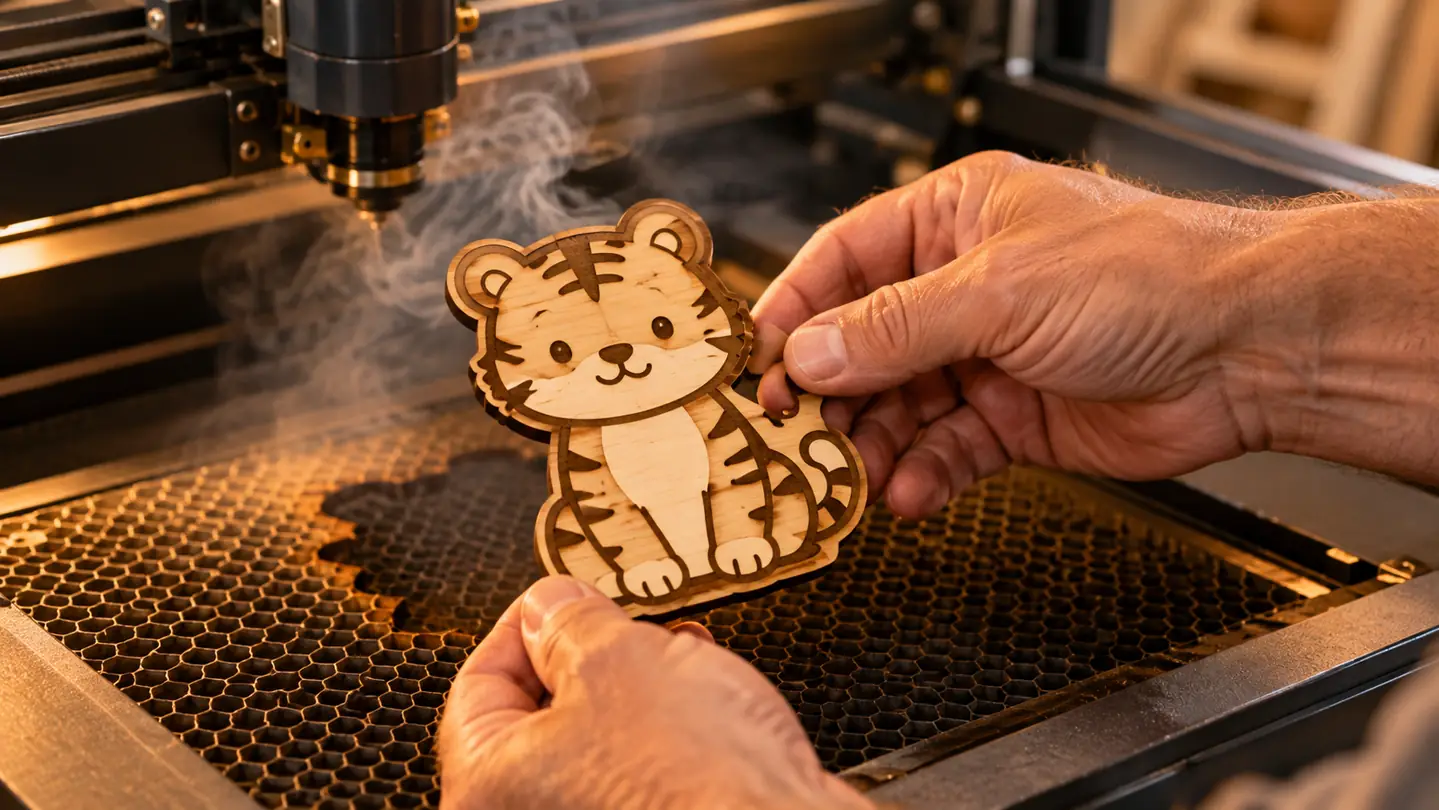
Ten watts of optical power from a 450nm diode is enough for the products I move at fairs: maple and walnut cutting boards, slate coasters, leather keychains and small wooden signs. It engraves dark and clean into hardwood, and it cuts thin ply and basswood without a fight. I am not going to tell you it replaces a big tube machine for production runs. I will tell you it handles the depth of work a weekend seller needs, without a water chiller taking up floor space.
Air assist ships in the box, not as an upsell
The included air assist pump and tubing is the detail I underrated. Air blowing at the burn point keeps smoke off the lens and keeps soot from settling back into the engraving. On slate and on dark walnut the difference is visible enough that a customer will notice it without being told. Because it comes with the machine, I did not have to order a pump separately and guess at the tubing size. If you have never run air assist, plan your venting around it, because it moves smoke around your shop more than you expect.
Assembly takes an evening, not a weekend
The box includes the assembly tools, a TF card, a card reader, and the air assist pump with tubing. I had mine framed and running the same evening I opened it, and I am not a patient man with flat-pack instructions. Most of that time went into squaring the frame and running a test burn, not into hunting for an Allen key. Budget an evening, a level surface and decent light. Do that and your first burn happens before you lose interest, which is a bigger factor in this hobby than anybody admits.
The 32-bit dual-core mainboard keeps long jobs moving
Long engraving jobs used to be where a cheap board showed its seams. The TTS-10 Pro uses a 32-bit dual-core mainboard, and the practical result is that a detailed sign or a full sheet of coasters does not stall partway through. I have started multi-hour jobs on a Saturday morning and had them finish while I was doing something else in the garage. Faster processing also shortens the gap between hitting go and knowing whether your settings were right, which is how you learn settings quickly.
The bed is 300x300mm, roughly 11.8 inches square, and that number is the reason my second batch matches my first.
The TF card means no laptop tethered to the machine
A 4GB TF card and a card reader come with it. I load a file at the house, walk it out to the garage, and the machine runs on its own. My laptop stays inside where the sawdust is not. For anyone working out of a detached garage or a shed, that is a bigger deal than the spec sheet suggests, because you are not dragging a computer out in the cold and you are not worried about a cable snagging halfway through a job. Old habit from the trade: fewer things plugged in, fewer things to troubleshoot.
A corded 24 volt diode is simpler to live with than a tube machine
Diode machines plug into the wall and run. There is no water chiller, no tube to align, no coolant to change. The TTS-10 Pro is corded electric at 24 volts, so my whole setup is the machine, the air pump and the shop vac. Simplicity matters when you are learning. Every hour you spend maintaining equipment is an hour you are not filling orders, and beginners quit over maintenance far more often than they quit over bad designs.
One machine covers five products at a fair
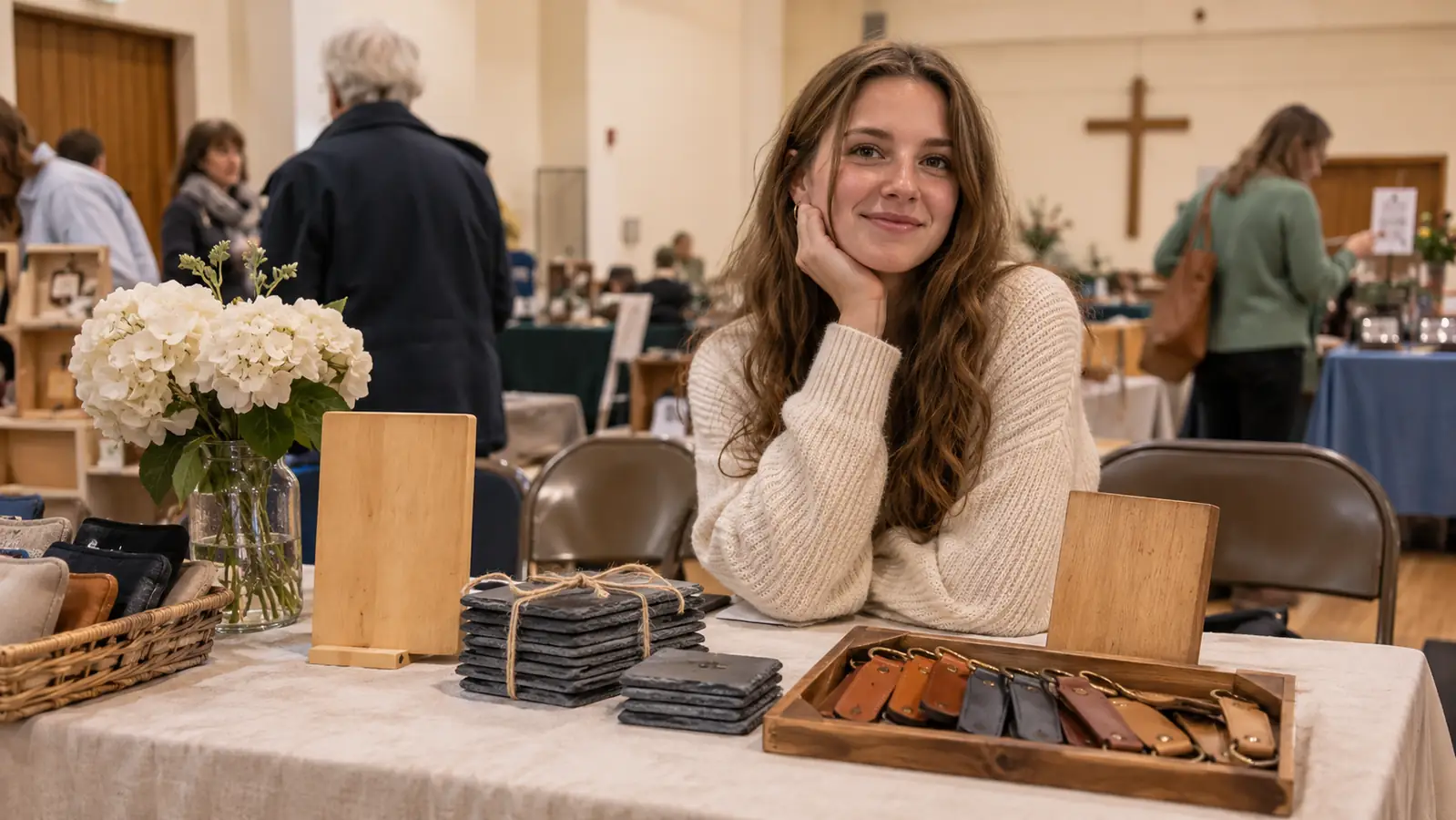
At a church bazaar I put out cutting boards, slate coasters, tumblers, leather keychains and small wooden signs. All five come off the same bed. That is the real argument for a 300x300mm work area: you are not buying one product line, you are buying the ability to test several without buying more equipment. Carol picks the designs and I run the batches. If a table does not move one item, we drop it and push another without changing a thing in the shop.
A fixed work area makes batch runs repeatable
The 300x300mm bed, roughly 11.8 inches square, is the number that earned its keep. Once a coaster or a sign blank is jigged against a stop, every piece in the run lands in the same spot. Customers buy two of something and expect the second one to match the first. Consistency is what turns a table sale into a custom order from a neighbor. If your bed shifts between jobs, your second run never matches your first and you will hear about it.
The one year warranty makes it a sensible first serious machine
The manufacturer lists a one year warranty, and 4.2 stars across 731 ratings is not a perfect record. Read the low reviews before you buy, same as you would for a furnace. But as a first machine you plan to grow into, this is the one I would point a beginner toward. It has the work area and the power to make sellable product, the parts to run it without extra purchases, and enough support behind it that a failure is a nuisance rather than a loss.
What I'd Skip
Skip the idea that the machine sells anything for you. My first month, I engraved a pile of designs I liked and sold almost none of them. The pieces that moved were the plain ones: a name on a cutting board, a date on a slate coaster, a logo on a leather patch. Skip the thin bargain blanks that warp under the laser, and skip running without air assist because you want to save a step. And skip buying a second machine before this one has paid back its bench space in finished orders. The Twotrees TTS-10 Pro will do the work. It will not do the choosing.
If you are buying one machine this year, buy the one with the air pump in the box
10W diode, 300x300mm work area, 32-bit dual-core mainboard, assembly tools and air assist included. See today's price and what 731 buyers say about it.
Amazon Check Today's Price on Amazon →